We use cookies to enhance the usability of our website. If you continue, we'll assume that you are happy to receive all cookies. More information. Don't show this again.
Fields »
 

Field

Term
Gene name

Class

Subclass

Chromosome

External id

In atlas

Reliability

Reliability

Reliability

Validation

Method

Validation

Method

Validation

Method

Validation

Location

Searches

Tissue

Cell type

Expression

Tissue

Specificity

Cell line

Specificity

Cancer

Specificity

Tissue

Detectable

Cell line

Detectable

Cancer

Detectable

Cancer

Prognosis

Category

Score

Score

Score

Antibodies

Column


ABOUT
HELP
BLOG
  • THE HUMAN PROTEOME
  • THE HUMAN TISSUES
  • THE HUMAN CELL
  • HUMAN PATHOLOGY
  • PROTEIN CLASSES
  • PROTEIN EVIDENCE
    • NEWS
    • BLOG
    • EVENTS
    • PRESS ROOM
    • LEARN
    • DICTIONARY
    • METHODS
    • CELL LINES
  • THE PROJECT
  • INTRODUCTION
  • ORGANIZATION
  • PUBLICATIONS
  • PUBLICATION DATA
  • ANTIBODY SUBMISSION
  • ANTIBODY AVAILABILITY
  • LINKS
  • CONTACT
  • TECHNICAL DATA
  • ANTIBODY VALIDATION
  • ASSAYS & ANNOTATION
  • DISCLAIMER
  • DOWNLOADABLE DATA
  • HELP & FAQ
  • LICENCE & CITATION
  • PRIVACY STATEMENT
  • RELEASE HISTORY
FANCL
  • premium

    TISSUE

  • CELL

  • PATHOLOGY

PATHOLOGY ATLAS

GENE/PROTEIN

Antibody validation

Dictionary

Level of antibody staining/expression


High
Medium
Low
Not detected

GENERAL INFORMATION

Gene name

FANCL

Gene description

Fanconi anemia, complementation group L

Protein class

Disease related genes
Predicted intracellular proteins

Predicted localization

Intracellular

Number of transcripts

9
SHOW MORE

HUMAN PROTEIN ATLAS INFORMATION

RNA category

TCGA (cancer tissue):Expressed in all
HPA (cell line):Expressed in all
HPA (normal tissue):Expressed in all

Protein evidence

Evidence at protein level

Protein expression
normal tissue

Cytoplasmic expression in most tissues.

ANTIBODY IHC RELIABILITY

Data reliability
description

Antibody staining mainly consistent with RNA expression data.

Reliability score

Supported based on 3 antibodies.
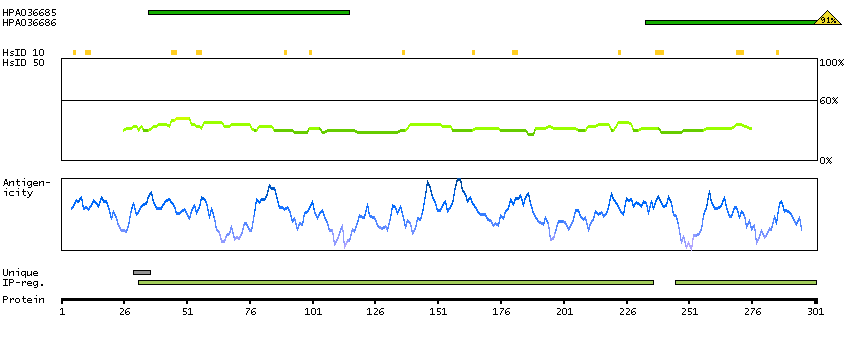
HPA036685 , HPA036686 , CAB033842
SHOW MORE

PROGNOSTIC SUMMARY

Prognostic marker in renal cancer (unfavourable), liver cancer (unfavourable) and urothelial cancer (favourable).
Renal cancer p<0.001
Liver cancer p<0.001
Urothelial cancer p<0.001
Show all

RNA EXPRESSION OVERVIEW

TCGA dataset
RNA cancer category: Expressed in all

PROTEIN EXPRESSION

Colorectal cancer
Breast cancer
Prostate cancer
Lung cancer
Pancreatic cancer

STAINING SUMMARY

HPA036685
HPA036686
CAB033842

Cancer

Cancer staining

Protein
expression of
normal tissue

Breast cancer
 
Carcinoid
 
Cervical cancer
 
Colorectal cancer
 
 
Endometrial cancer
 
 
Glioma
 
Head and neck cancer
 
 
Liver cancer
 
 
Lung cancer
 
 
Lymphoma


Cancer

Cancer staining

Protein
expression of
normal tissue

Melanoma
 
Ovarian cancer
 
Pancreatic cancer
 
Prostate cancer
 
Renal cancer
 
Skin cancer
 
Stomach cancer
 
 
Testis cancer
 
Thyroid cancer
 
Urothelial cancer
 

Staining summary

Moderate to strong cytoplasmic positivity was observed in colorectal, breast and ovarian cancer as well as a few cases of cervical, endometrial and liver cancers. Prostate cancer and several cases of pancreatic, gastric, testicular, urothelial and thyroid cancer were moderately stained. Remaining cancer cells were weakly stained or negative.

Cancer

Cancer staining

Protein
expression of
normal tissue

Breast cancer
 
Carcinoid
 
Cervical cancer
 
Colorectal cancer
 
 
Endometrial cancer
 
 
Glioma
 
Head and neck cancer
 
 
Liver cancer
 
 
Lung cancer
 
 
Lymphoma


Cancer

Cancer staining

Protein
expression of
normal tissue

Melanoma
 
Ovarian cancer
 
Pancreatic cancer
 
Prostate cancer
 
Renal cancer
 
Skin cancer
 
Stomach cancer
 
 
Testis cancer
 
Thyroid cancer
 
Urothelial cancer
 

Staining summary

A majority of cancers displayed weak to moderate cytoplasmic positivity. Thyroid cancers and a few colorectal and prostate cancers were strongly stained.

Cancer

Cancer staining

Protein
expression of
normal tissue

Breast cancer
 
Carcinoid
 
Cervical cancer
 
Colorectal cancer
 
 
Endometrial cancer
 
 
Glioma
 
Head and neck cancer
 
 
Liver cancer
 
 
Lung cancer
 
 
Lymphoma


Cancer

Cancer staining

Protein
expression of
normal tissue

Melanoma
 
Ovarian cancer
 
Pancreatic cancer
 
Prostate cancer
 
Renal cancer
 
Skin cancer
 
Stomach cancer
 
 
Testis cancer
 
Thyroid cancer
 
Urothelial cancer
 

Staining summary

Most cancer tissues showed moderate cytoplasmic and membranous positivity. Gliomas were weakly stained or negative.

GENE INFORMATION

Gene name

FANCL (HGNC Symbol)

Synonyms

FAAP43, FLJ10335, PHF9, Pog

Description

Fanconi anemia, complementation group L (HGNC Symbol)

Entrez gene summary

The Fanconi anemia complementation group (FANC) currently includes FANCA, FANCB, FANCC, FANCD1 (also called BRCA2), FANCD2, FANCE, FANCF, FANCG, FANCI, FANCJ (also called BRIP1), FANCL, FANCM and FANCN (also called PALB2). The previously defined group FANCH is the same as FANCA. Fanconi anemia is a genetically heterogeneous recessive disorder characterized by cytogenetic instability, hypersensitivity to DNA crosslinking agents, increased chromosomal breakage, and defective DNA repair. The members of the Fanconi anemia complementation group do not share sequence similarity; they are related by their assembly into a common nuclear protein complex. This gene encodes the protein for complementation group L. Alternative splicing results in two transcript variants encoding different isoforms. [provided by RefSeq, Jul 2008]

Chromosome

2

Cytoband

p16.1

Chromosome location (bp)

58159243 - 58241372

Protein evidence

Evidence at protein level (all genes)

Ensembl

ENSG00000115392 (version 83.38)

Entrez gene

55120

UniProt

Q9NW38 (UniProt - Evidence at protein level)

neXtProt

NX_Q9NW38

Antibodypedia

FANCL antibodies

PROTEIN BROWSER

FANCL-001
FANCL-002
FANCL-003
FANCL-004
FANCL-005
FANCL-006
FANCL-007
FANCL-008
FANCL-009

PROTEIN INFORMATION

Splice variant

UniProt

Protein class

Gene ontology

Length & mass

Signal peptide
(predicted)

Transmembrane regions
(predicted)

FANCL-001
ENSP00000233741
ENST00000233741
Q9NW38 [Direct mapping]
E3 ubiquitin-protein ligase FANCL
Show all
Predicted intracellular proteins
Disease related genes
Protein evidence (Ezkurdia et al 2014)
Show all
GO:0002230 [positive regulation of defense response to virus by host]
GO:0004842 [ubiquitin-protein transferase activity]
GO:0005515 [protein binding]
GO:0005654 [nucleoplasm]
GO:0005737 [cytoplasm]
GO:0006281 [DNA repair]
GO:0006513 [protein monoubiquitination]
GO:0006974 [cellular response to DNA damage stimulus]
GO:0008270 [zinc ion binding]
GO:0016874 [ligase activity]
GO:0031625 [ubiquitin protein ligase binding]
GO:0036297 [interstrand cross-link repair]
GO:0043240 [Fanconi anaemia nuclear complex]
GO:0061630 [ubiquitin protein ligase activity]
Show all
375 aa
42.9 kDa
No 0
FANCL-002
ENSP00000385021
ENST00000402135
Q9NW38 [Direct mapping]
E3 ubiquitin-protein ligase FANCL
Show all
Predicted intracellular proteins
Disease related genes
Protein evidence (Ezkurdia et al 2014)
Show all
GO:0002230 [positive regulation of defense response to virus by host]
GO:0004842 [ubiquitin-protein transferase activity]
GO:0005515 [protein binding]
GO:0005635 [nuclear envelope]
GO:0005654 [nucleoplasm]
GO:0005737 [cytoplasm]
GO:0006281 [DNA repair]
GO:0006513 [protein monoubiquitination]
GO:0006974 [cellular response to DNA damage stimulus]
GO:0007276 [gamete generation]
GO:0008270 [zinc ion binding]
GO:0016874 [ligase activity]
GO:0031625 [ubiquitin protein ligase binding]
GO:0036297 [interstrand cross-link repair]
GO:0042127 [regulation of cell proliferation]
GO:0043240 [Fanconi anaemia nuclear complex]
GO:0061630 [ubiquitin protein ligase activity]
Show all
380 aa
43.4 kDa
No 0
FANCL-003
ENSP00000401280
ENST00000449070
C9JZA9 [Direct mapping]
E3 ubiquitin-protein ligase FANCL
Show all
Predicted intracellular proteins
Protein evidence (Ezkurdia et al 2014)
Show all
GO:0004842 [ubiquitin-protein transferase activity]
GO:0006281 [DNA repair]
GO:0016567 [protein ubiquitination]
GO:0043240 [Fanconi anaemia nuclear complex]
Show all
301 aa
34.1 kDa
No 0
FANCL-004
ENSP00000386097
ENST00000403295
B5MC31 [Direct mapping]
E3 ubiquitin-protein ligase FANCL
Show all
Predicted intracellular proteins
Protein evidence (Ezkurdia et al 2014)
Show all
GO:0004842 [ubiquitin-protein transferase activity]
GO:0006281 [DNA repair]
GO:0008270 [zinc ion binding]
GO:0016567 [protein ubiquitination]
GO:0043240 [Fanconi anaemia nuclear complex]
Show all
347 aa
39.8 kDa
No 0
FANCL-005
ENSP00000389448
ENST00000417361
C9JPN7 [Direct mapping]
E3 ubiquitin-protein ligase FANCL
Show all
Predicted intracellular proteins
Protein evidence (Ezkurdia et al 2014)
Show all
145 aa
16.4 kDa
No 0
FANCL-006
ENSP00000384046
ENST00000403676
B5MCZ6 [Direct mapping]
E3 ubiquitin-protein ligase FANCL
Show all
Predicted intracellular proteins
Protein evidence (Ezkurdia et al 2014)
Show all
GO:0004842 [ubiquitin-protein transferase activity]
GO:0006281 [DNA repair]
GO:0008270 [zinc ion binding]
GO:0016567 [protein ubiquitination]
GO:0043240 [Fanconi anaemia nuclear complex]
Show all
258 aa
29.4 kDa
No 0
FANCL-007
ENSP00000390991
ENST00000446381
C9J512 [Direct mapping]
E3 ubiquitin-protein ligase FANCL
Show all
Predicted intracellular proteins
Protein evidence (Ezkurdia et al 2014)
Show all
158 aa
17.9 kDa
No 0
FANCL-008
ENSP00000483263
ENST00000481670
A0A087X0C0 [Direct mapping]
E3 ubiquitin-protein ligase FANCL
Show all
Predicted intracellular proteins
Protein evidence (Ezkurdia et al 2014)
Show all
124 aa
14.4 kDa
No 0
FANCL-009
ENSP00000400969
ENST00000427708
H7C1M0 [Direct mapping]
E3 ubiquitin-protein ligase FANCL
Show all
Predicted intracellular proteins
Protein evidence (Ezkurdia et al 2014)
Show all
288 aa
32.7 kDa
No 0

Contact

  • BLOG
  • PRESS ROOM
  • contact@proteinatlas.org

The Project

  • INTRODUCTION
  • ORGANIZATION
  • PUBLICATIONS
  • DOWNLOADABLE DATA

The Human Protein Atlas

  • ANTIBODY AVAILABILITY
  • LICENCE & CITATION
  • HELP & FAQ
The Human Protein Atlas project is funded
by the Knut & Alice Wallenberg foundation.